FitFido
The bowl that knows your dog.
Your dog steps up to eat. The bowl reads their weight, adjusts the next portion, and files it away. You just fill the bowl.


Everything happens at the bowl.
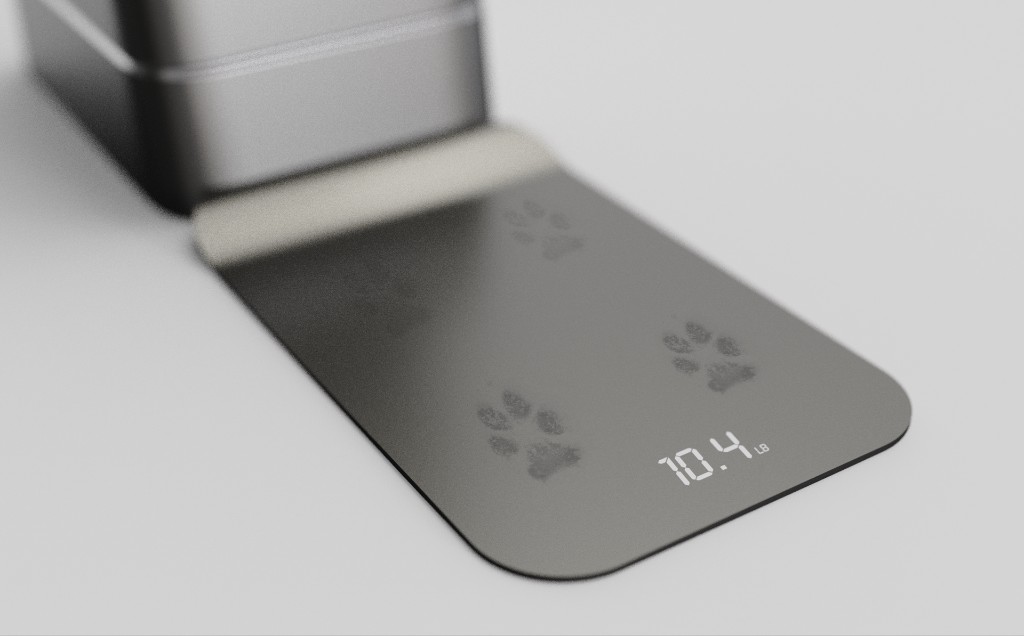
1. Weight, captured automatically.
The moment a dog steps up to eat, precision sensors in the base log their weight — silently, without any extra step. The scale is already there.
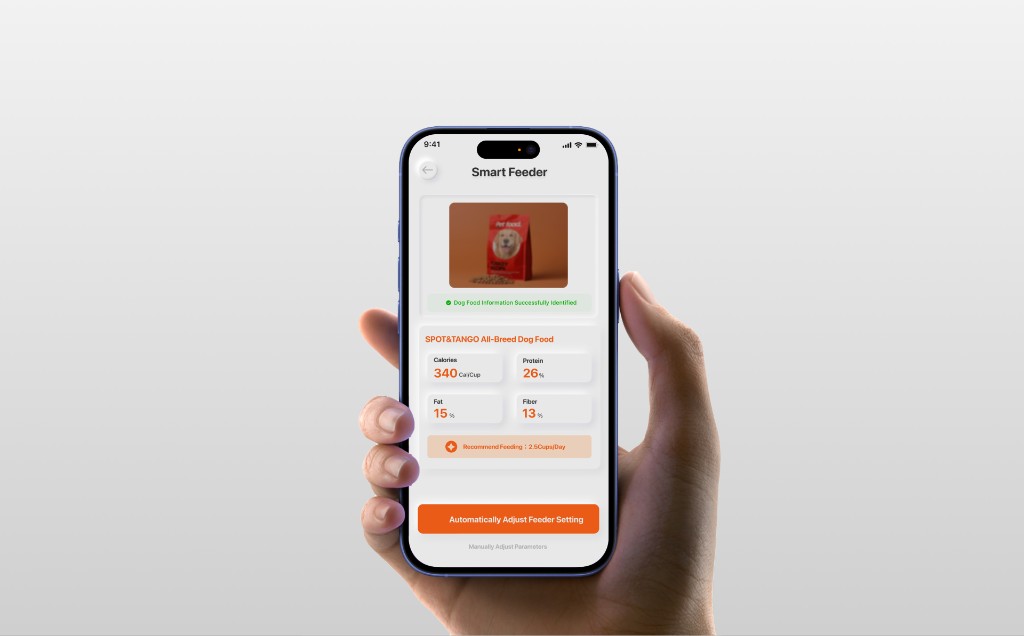
2. Snap the bag. Done.
Point the camera at the food bag. The app reads the calorie density, then calculates the right portion for today's weight — automatically.
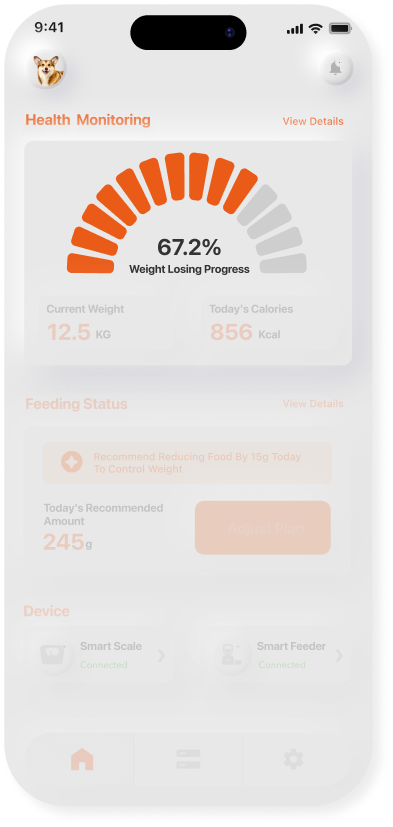
3. Progress, not numbers.
One progress bar. A clear direction. Owners know exactly whether their dog is on track — without decoding charts or interpreting raw data.
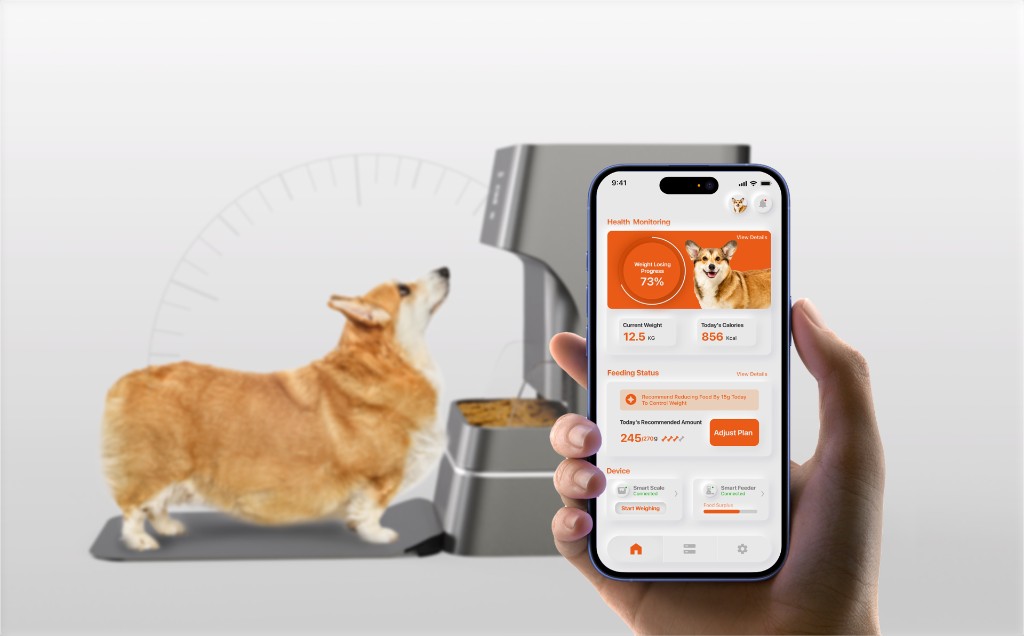
Two moments. One gap.
Weighing your dog and feeding your dog are two separate moments — different tools, different places, different contexts. That gap adds up. Nearly 59% of pets struggle with obesity simply because owners lack clear, daily feedback.
The Opportunity: What if the scale was already there? Hiding it inside the bowl turns a daily necessity into effortless health tracking — no new habits required.
Choose dumb or overwhelming. There's no middle ground.
The market splits in two: bowls that do nothing, and smart feeders that track one thing without connecting to the others. Owners are left to fill the gap themselves.
| Product | Weighing | AI Portioning | Health Insights | Calorie Detection | Price |
|---|---|---|---|---|---|
| FitFido | ✔ | ✔ | ✔ | ✔ | $149.99 |
| W*** | ✘ | ✘ | ✔ | ✔ | $299.00 |
| P*** | ✘ | ✘ | ✔ | ✘ | $139.99 |
| E*** | ✘ | ✘ | ✔ | ✔ | $42.49 |
Eleven owners. One honest picture.
Eleven dog owners. Different breeds, different struggles. The same core frustration: knowing their dog's health mattered, but having no clear daily signal to act on it.
Balanced Feeding Habits
Accurate Measurement
"I just pour by feel. Those charts on the back of the bag are impossible to decode."
"When I work late, I feel guilty. I usually overfeed treats when I get home to make up for it."
"I bought a pet scale once. Trying to hold a squirming dog while reading a number was a nightmare."
Guide dogs back to a healthy
Body Condition Score (BCS)
of 3-4 within six months, without adding stress to the owner's daily routine.
Six owners. A real prototype. Real answers.
Six dog owners tested our hardware prototype and app in a moderated study. We tracked task completion — and watched how the system made them feel.
| Task | Success Rate | Avg. Time | User Feedback / Insight |
|---|---|---|---|
| T1: Auto-weighing | 100% | 3.6s | "I didn't even know it was weighing..." |
| T2: Food Recognition | 95% | 12.0s | "Numbers are confusing." |
| T3: Dynamic Portioning | 83% | 25.0s | "Worried if my dog spills food." |
| T4: Health Trends | 100% | 5.0s | "Just like my fitness tracker." |
We heard them. We changed it.
The Problem
"The first dashboard tried to show everything at once. Users left every session more confused than when they started."
The Iteration
"We removed everything that didn't serve a decision. One progress indicator, one clear next action. The interface stopped feeling like a tool and started feeling like a companion."
 V1
V1
 V2
V2
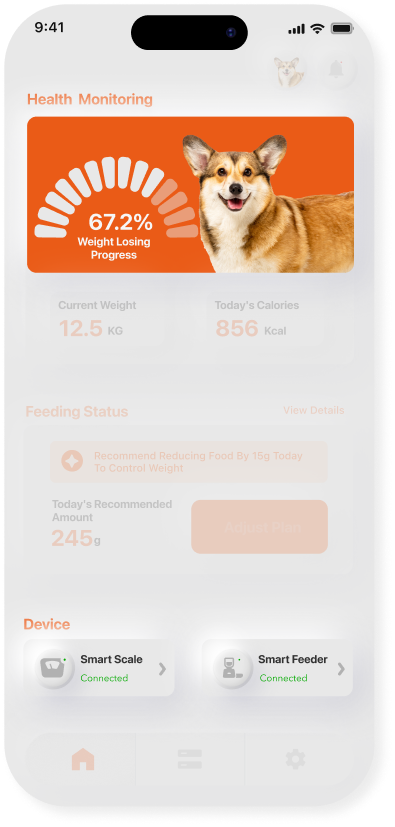 V3
V3
 V4 (Final)
The Unified Hardware-Software Ecosystem
 Hardware & App
 UI Design
 Usage Scenario
Hide the action inside an instinct.
Most pet health products ask owners to adopt a new habit — strap on a collar, schedule a weigh-in, log meals. The data shows what happens to those habits: people try them for two weeks and stop.
FitFido's real design decision was made before we drew a single screen. The dog already eats every day, so the scale moved into the bowl. Weight tracking stopped being an action and became a side effect of eating. The app, the portion logic, the dashboard — all of it is downstream of that one choice.
The lesson I took from this project: the most valuable design move is often subtraction at the level of behavior, not the interface. The question isn't "how do we make this feature easier to use." It's "what does the user already do on instinct that we can quietly attach to."